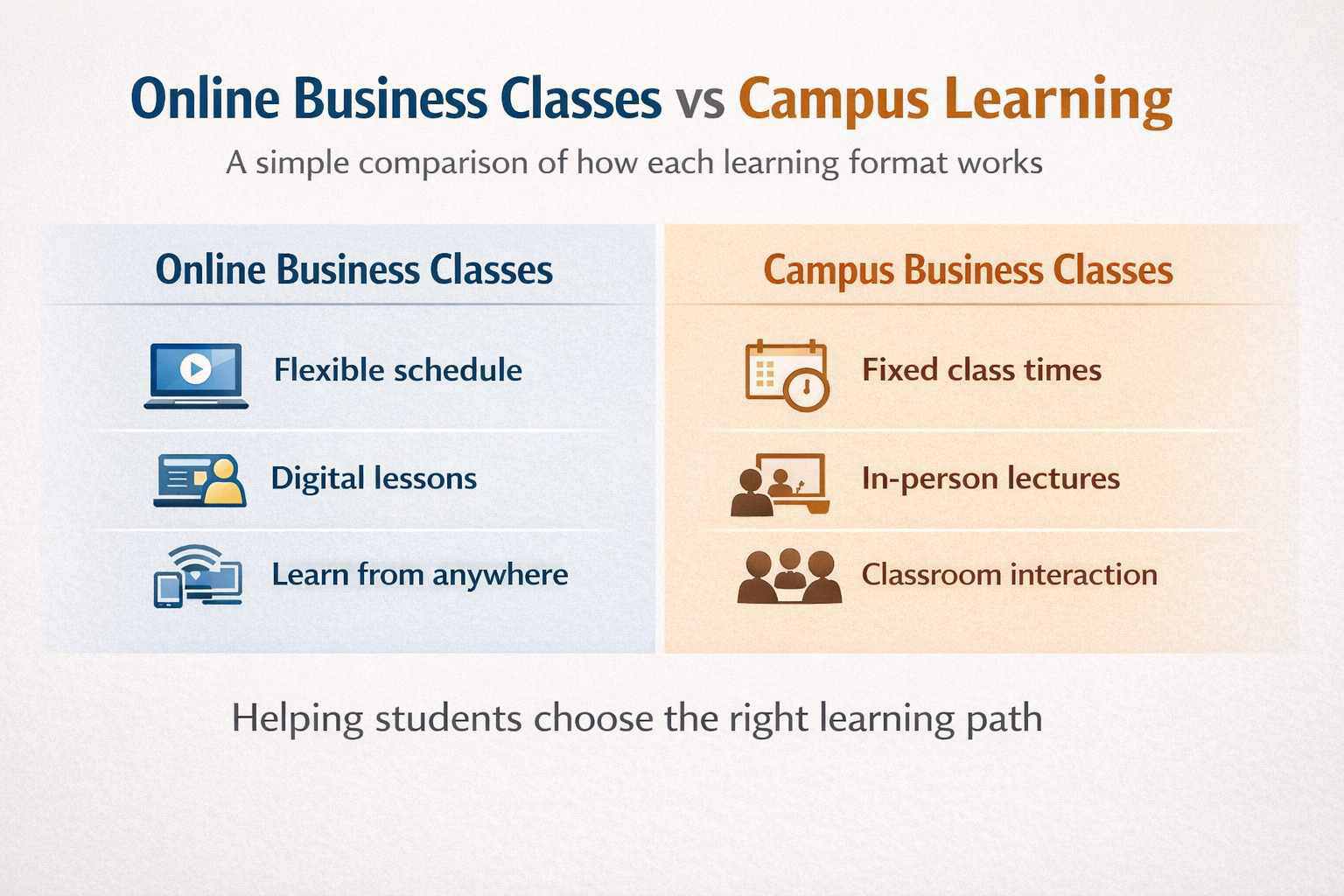
Choosing between online and campus business classes can feel tricky, but each path offers unique benefits.
Online classes give you flexibility, digital tools, and the comfort to study anywhere.
Campus learning offers structure, face-to-face interaction, and an active community.
This guide explains how both formats work, their key differences, and how each can help you build business skills and achieve your career goals effectively.
What Happens Inside an Online Business Class?
Online business classes run through a learning platform. You log in, view lessons, and complete tasks at your own pace or on a set schedule. You access everything through your laptop or phone.
Most online classes include:
- Video lectures
- Reading materials
- Quizzes or assignments
- Discussion boards
- Virtual office hours with instructors
You move through weekly modules. Each module focuses on a topic like marketing basics, financial accounting, or business strategy. You complete tasks and submit them digitally.
Many programs use learning tools such as:
- Recorded videos for self-paced learning
- Live sessions through Zoom or similar platforms
- Online quizzes with instant results
- Group projects in shared online workspaces
You don’t sit in a classroom. You study wherever you feel comfortable. The environment depends on how you set it up.
How Does a Campus Business Class Work?
Campus classes follow a fixed schedule. You attend lectures on set days and times. You sit in a classroom, take notes, and interact face-to-face with classmates and professors.
You might find:
- Lectures in large halls
- Group discussions in classrooms
- On-campus presentations
- In-person exams
Campus learning follows a structured routine. You commute, attend class, and follow campus policies. You meet people in hallways, cafeterias, and study spaces. Social interaction happens naturally.
How Do Online and Campus Classes Deliver Lessons Differently?
Online classes offer flexible content. You pause, replay, and review lectures. You take notes at your own speed. Campus lectures move forward in real time. If you miss something, you rely on notes or ask later.
Online platforms organize content into sections. You often see progress checklists. Campus learning relies on schedules and printed syllabi.
Online learning focuses on digital submissions. Campus learning often involves physical submissions, in-person tests, and handwritten work.
How Do You Communicate With Instructors?
Online classes use:
- Discussion boards
- Chat portals
- Virtual meetings
You contact instructors when you need help. Many respond within set hours. You might schedule a video call to ask questions about assignments or career advice.
Campus classes allow direct conversation. You raise your hand, talk after class, or visit office hours in person. Interaction feels immediate because you share the same physical space.
What About Group Work?
Online business programs still include teamwork. You collaborate through shared documents, video calls, and messaging apps. You divide tasks and meet online based on everyone’s schedule.
Campus teamwork happens face-to-face. You meet in classrooms or libraries. You brainstorm, present, and practice in person.
Both formats teach communication and leadership. The difference lies in how you connect with others.
How Does Testing Work?
Online programs use:
- Timed quizzes
- Case-study assignments
- Open-book assessments
- Proctored online exams
Many tests focus on real-world business tasks. You might analyze a financial problem or design a marketing plan.
Campus programs often use in-person exams. You sit in a classroom and complete a paper-based test. Some classes use presentations and practical tasks.
How Do You Build Skills in Each Format?
Online business classes focus on:
- Digital communication
- Time management
- Self-discipline
- Technology use
Campus classes build:
- Public speaking
- Face-to-face teamwork
- Classroom participation
- On-the-spot discussion
Both paths develop business knowledge. The skills differ based on how you learn and interact.
How Does Networking Compare?
Online networking happens through:
- Virtual events
- Online discussion groups
- Alumni platforms
- Social forums
You can connect with people from different countries and industries. You build a wide network without travel.
Campus networking grows through:
- In-person meetings
- Student clubs
- Career fairs
- Campus events
You form personal relationships through frequent contact. You see the same people often, which builds strong bonds.
What About Career Support?
Online programs offer digital career tools like resume reviews, job boards, and virtual coaching. Some schools connect students with remote internships.
Campus programs often provide face-to-face career counseling, on-site company visits, and in-person recruiting events.
Both formats can lead to career growth. The path depends on how actively you use the resources.
How Do Costs Compare?
Many online programs cost less because they remove housing, travel, and campus fees. You pay mainly for tuition and materials. You also save time by studying from home.
Campus programs include tuition plus living expenses, transportation, and campus services. The total cost can be higher if you relocate or stop working.
Online learning lets you study while keeping your job. Campus programs may require more schedule adjustments.
Which Format Fits Your Learning Style?
Ask yourself:
- Do you learn well on your own?
- Do you need face-to-face interaction?
- Can you manage your time without reminders?
- Do you prefer flexibility or structure?
If you work full-time or have family duties, online learning might fit better. If you like daily interaction and classroom energy, campus learning might feel more natural.
What Does a Week Look Like in Each Format?
Online
- Watch videos at your chosen time
- Complete assignments before deadlines
- Join optional live sessions
- Participate in online discussions
Campus
- Attend scheduled lectures
- Meet classmates in person
- Take quizzes or tests during class
- Work on campus-based projects
The online path adapts to your life. The campus path shapes your routine.
Do Employers Value Online Business Degrees?
Many employers focus on your skills, knowledge, and results. Online programs from accredited institutions carry weight. They show that you can work independently and handle technology, which many businesses need.
Campus degrees also hold strong value. They reflect traditional academic training and social engagement.
Your performance, projects, and experience play a major role in your job prospects in either format.
How Can You Succeed in an Online Class?
You improve your results by:
- Setting a study schedule
- Keeping distractions low
- Engaging in discussions
- Asking questions early
- Using digital tools effectively
Tracking progress each week helps you stay motivated. Many students find that small, consistent study sessions work better than long cramming sessions.
How Can You Succeed on Campus?
You make progress by:
- Attending every class
- Participating actively
- Meeting instructors for feedback
- Joining clubs or groups
- Building relationships with peers
Showing up and staying engaged leads to strong connections and deeper learning.
Which One Should You Choose?
Think about your goals. If you want flexibility, cost savings, and self-paced learning, online business classes offer a strong path.
If you want in-person interaction, structured routines, and campus life, a traditional program might suit you.
Both formats teach business principles. Both can support your career. The best choice depends on how you learn, work, and plan your future.

I am a blogger with 2.5 years of experience. My goal is to provide 100% honest and helpful information on this blog website.